

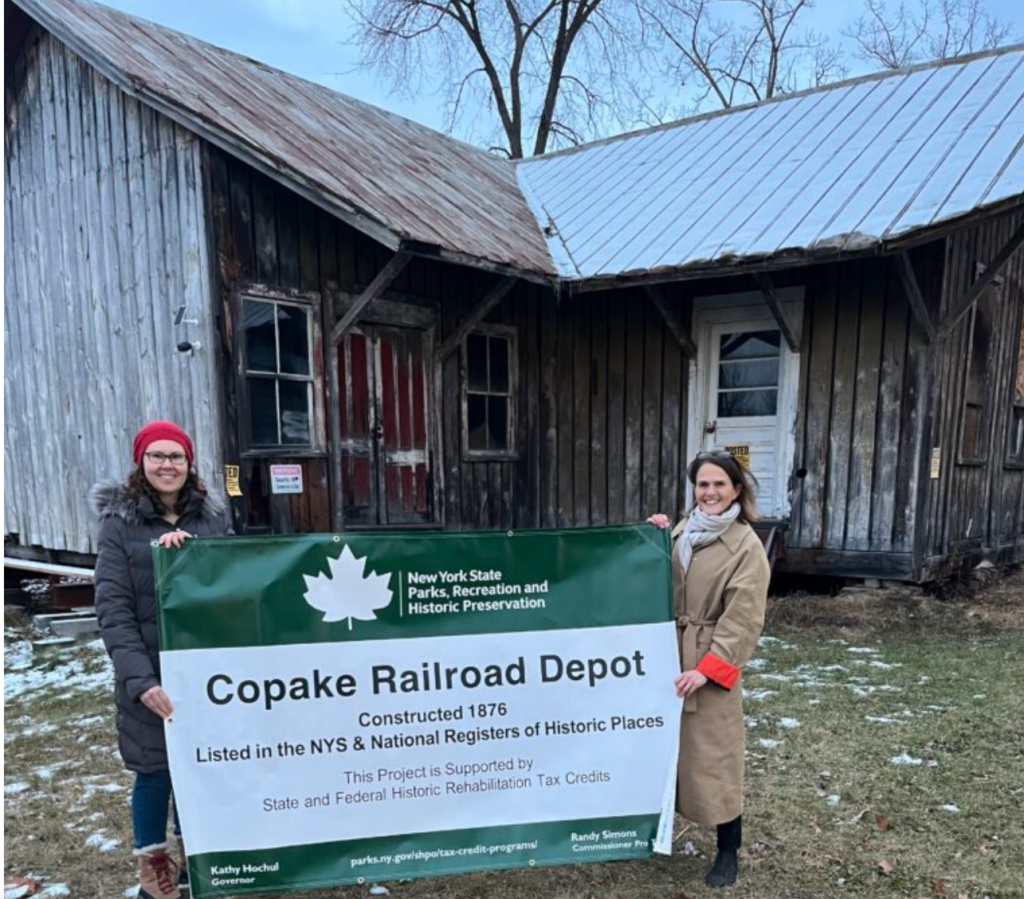
Most people would have driven past this sad, abandoned building and seen a lost cause…if they noticed it at all.
Steph took one look and saw a future. After taking ownership of the ca-1876 train depot in Copake, NY, in 2021, one of the first things she did was call Worth Preserving.
Since then, we’ve been on an incredible journey together, uncovering the depot’s history, identifying the architectural features that remain despite decades of neglect, navigating the regulatory (and historic tax credit!) process, and working through the complex decisions that come with transforming a 150-year-old building into a 21st-century home. Worth Preserving: 1876 Train Depot
But this project’s greatest asset isn’t the building—it’s Stephanie herself. The best preservation projects begin with owners who are curious, patient, willing to learn, and committed to taking the long road. In other words, owners who see themselves as stewards.
In the conversation below, Steph shares what inspired her to take on this ambitious project, why she reached out for help, and what motivates her to stick with it.
WP: What first drew you to the 1876 Copake Train Depot?
Steph: I’ve always loved trains. I have my parents to thank for that—there were a lot of historic train rides and railroad museums in my childhood. When I moved to the Hudson Valley 5 years ago, I was searching for a unique historic property, and when I saw an overgrown, crumbling little train depot in Copake, I knew I needed to save it.
WP: Before working with Worth Preserving, what aspects of restoring a historic railroad structure felt most daunting or uncertain to you?
Steph: I wanted to restore the train depot in a way that honored its historic appearance and purpose as much as possible, but how do you do that when the building has never had plumbing, electrical, heating and cooling, insulation, and all the other modern conveniences? Figuring out how to turn the vision into reality, and balance historic restoration with modern building code was a daunting challenge.
WP: You’ve done renovation work before — had you considered taking this project on as a DIY?
Steph: Not a chance! I knew just enough about old buildings by then to know that I needed expert guidance. It’s definitely my most ambitious project to date, with unique challenges that come with converting a train depot into a home while retaining its original character.
WP: Can you describe a moment during the project when you realized the value of having a preservation-focused advocate helping guide decisions about the building?
Steph: Every moment. So many people have told me the depot isn’t worth saving, or is too far gone to save. Kate’s guidance has been invaluable to understanding what can be preserved and restored (like the original windows and doors), and how to draw on historic photos and research to recreate what was lost. It’s nice to know I’m not crazy for wanting to save this little old building, and that even after decades of abandonment, there are elements left that are worth preserving.

 WP: Are you a steward thinking about the future of your historic home? Ready to stop guessing and start planning?
You don’t have to figure it out alone. As Stephanie’s journey shows, successful historic rehabilitation projects are a team sport. We start with a clear understanding of what makes your old house special, and then we strategize on how to adapt it thoughtfully for modern life.
Let’s schedule a call to discuss practical next steps.
WP: What first drew you to the 1876 Copake Train Depot?
I’ve always loved trains. I have my parents to thank for that—there were a lot of historic train rides and railroad museums in my childhood. When I moved to the Hudson Valley 5 years ago, I was searching for a unique historic property, and when I saw an overgrown, crumbling little train depot in Copake, I knew I needed to save it.
WP: What gave you the confidence to take on such an ambitious rehabilitation project?
I’m persistent! And I’m good at building teams. I knew I couldn’t do it alone, and that I had a lot to learn (and still do), but I was confident I could create the vision and find the right people to help me achieve it. I was also prepared to take my time to understand the building and the complexities of the project, and work through each problem one by one.
WP: You’ve done renovation work before — had you considered taking this project on as a DIY?
Not a chance! I knew just enough about old buildings by then to know that I needed expert guidance. It’s definitely my most ambitious project to date, with unique challenges that come with converting a train depot into a home while retaining its original character.
WP: Before working with Worth Preserving, what aspects of restoring a historic railroad structure felt most daunting or uncertain to you?
I wanted to restore the train depot in a way that honored its historic appearance and purpose as much as possible, but how do you do that when the building has never had plumbing, electrical, heating and cooling, insulation, and all the other modern conveniences? Figuring out how to turn the vision into reality, and balance historic restoration with modern building code was a daunting challenge.
WP: What has surprised you most about the process of working on a historic rehabilitation project?
I didn’t expect it would take 5 years to get all the permits (buying a caboose did complicate things a little, I’ll admit). While the process has been extremely frustrating at times, I’ve continued to learn about the building and its history over time, and the end result will be better for it. I didn’t anticipate becoming a beaver expert either.
WP: Can you describe a moment during the project when you realized the value of having a preservation-focused advocate helping guide decisions about the building?
Every moment. So many people have told me the depot isn’t worth saving, or is too far gone to save. Kate’s guidance has been invaluable to understanding what can be preserved and restored (like the original windows and doors), and how to draw on historic photos and research to recreate what was lost. It’s nice to know I’m not crazy for wanting to save this little old building, and that even after decades of abandonment, there are elements left that are worth preserving.
WP: As the depot evolves from an abandoned structure into a home, what feels most meaningful to you about balancing historic authenticity with modern living?
This is perhaps my favorite part of the project—finding just the right balance between preserving the old, adding the new, and telling the history of the building through the design. The depot was a hub for the town’s commerce and tourism. To me, the restoration isn’t only about the physical building, but also about renewing its purpose and significance in the community. It’s a really fun and creative design challenge!
WP: What are you most excited about as you look ahead to the next chapter of this building’s story?
This month, the Copake depot turns 150 years old! In the 1876 newspaper article announcing the depot’s completion, it was described as “small, but neat in appearance”. This little building has stood quietly, unnoticed and unloved for a long time. I look forward to the day when the depot is filled with locals and travelers once again, and perhaps newspapers will have something even more positive to say about it one day soon.

